Seles’s note: Hey everyone, how are you? 🤗 I’m currently revisiting and updating PE’s classics, starting with the Perfectionist series. In today’s post, I share why perfectionists may not be so perfect and my experiences as a perfectionist.
This is Part 1 one of 3 parts A series about the downsides of perfectionism and how to turn it into a positive force in your life.

(image)
Are you a perfectionist? Do you constantly strive for perfection in everything you do? Do you feel the need to improve everything you do to perfection, even at the expense of your happiness?
one perfectionist A person who strives for perfection and sets extremely high standards for himself. They have a strong desire to meet or exceed these standards in all aspects of life, whether in work, relationships, or personal achievement.
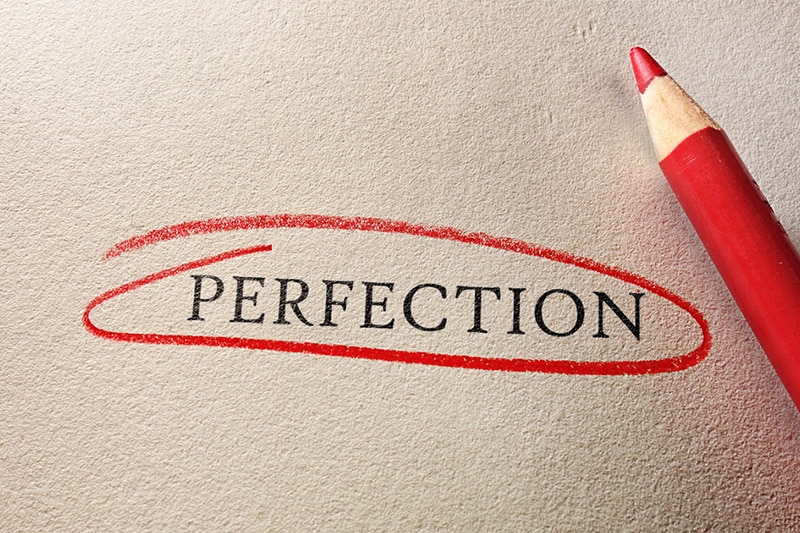
In psychology, perfectionism is a personality trait characterized by “a person’s pursuit of perfection and setting excessively high performance standards, accompanied by overly critical self-evaluation and concern about the evaluation of others.”(1)
To a perfectionist, anything less than perfect is unacceptable.
10 signs you’re a perfectionist
Perfectionism can manifest itself in many ways, and people with perfectionism tend to exhibit certain behaviors. Here are 10 signs you’re a perfectionist:
- You have extremely high standards. No matter what you plan to do, you have very high goals and standards. Sometimes, they can stress you out. To achieve these goals, you may stay up late and sacrifice sleep.
- Who are you Very critical of mistakes. You don’t like errors or mistakes because they imply imperfection – whenever you see a mistake, you are the first to correct it. Just knowing that a bug hasn’t been fixed can annoy you.
- you have a all or nothing mentality. This is also called black and white thinking. Either you do something to the highest level, or you don’t do it at all. You also tend to see things in extreme terms – if something isn’t done perfectly, that means it’s a disaster. There is no middle ground.
- Who are you Very meticulous and with great attention to detail. You focus on the smallest details of a task just to make sure everything is in place. You can spot errors when others can’t see them.
- Who are you Highly self-criticaleven in the little things. Whenever something goes wrong, you become very hard on yourself and wonder why you can’t do better, why you made this mistake.
- you Think carefully about the consequences It didn’t turn out as planned and wonder if things would have been different if you had just done X or Y. You also spend a considerable amount of time analyzing and second-guessing decisions and actions, wondering whether you made the best choice.
- you procrastination Just to do something at the “right” moment, or because you want to do it at the highest level. Sometimes you put off a task because the conditions aren’t perfect or you don’t feel like you can complete the task perfectly.
- You have Difficulty delegating to others. You find it difficult to delegate tasks to others because you feel they can’t do it better than you.
- you become defend against criticism and have a fear of failurebecause they imply that you’re not doing a good job or that there’s something wrong with you.
- you spend one Dedicate a lot of time to perfecting things, even beyond healthy limits. Perfection is the ultimate goal. You often sacrifice sleep, rest, and personal time just to perform at your highest level. For you, it’s all part of achieving your goals.
Do you see these qualities in yourself? How are the people around you?
My experience with perfectionism
I used to be quite a neurotic perfectionist when I was younger. In fact, all 10 traits fit me perfectly! I am still a perfectionist today, although I have learned to reduce the negative effects of perfectionism (more on this at Part 2).
A big part of my perfectionism is My inner drive and desire to be the best version of myself. I always feel that when we do something, we should do our best and not make excuses. While we are alive and on this earth, we should make the most of our time here and give our best in everything we do.
The second reason is mine education. I grew up in Singapore from the 1980s to the 2000s, a time when the culture and society were obsessed with conformity and adhered to extreme definitions of perfection.
This was especially true in my elementary school, where we were told to be the best and aim for the best—anything less was unacceptable. I was in the best class and when it came to quizzes and exams, we were taught to aim for 100/100 (a worthy goal), but when we got less than that, we felt like we weren’t good enough. When we make the smallest mistake, we are punished, condemned, and shamed.
In terms of behavior, we are required to follow many strict, dogmatic rules, such as only being allowed to wear hairbands and watches of a single color (only black, white, grey, and blue are allowed), or being allowed to wear certain hairstyles without letting hair touch or cover the face. How these rules help us become better people is questionable. Disobedience means isolation, Feeling shamed and punished in front of other students.
The fact is that I have highly sensitive to stimuli — which I thought was common to everyone, but growing up and realizing it wasn’t — further exacerbated my perfectionist tendencies. I experience external and internal stimuli (such as sounds, sights, and emotions) on a deep level, often observing details that many people do not.
These factors make me aim for the highest standards and be very meticulous in everything I do, i.e. a perfectionist. I would take this behavior to the highest level and become a neurotic perfectionist. This behavior extended to my studies, work, and relationships.
Examples of perfectionism in my life
Make a website
For example, when I start Creating a website as a teenager (As a hobby) I would stay up late, sometimes with only 1-2 hours of sleep, tweaking my website to perfection. This includes content, graphics, and HTML syntax.
My website has to look great on every resolution and every browser; the content I produce has to be of the highest standard imaginable. I’m constantly making small edits, like tiny single-pixel changes, and pay a lot of attention to how everything looks. This is a firm personal standard that I have set for myself.
The efforts paid off and my website received Over 500,000 monthly views. My visitors can recognize the quality of my work compared to others.
gamble
then as avid gamerI always perfect my game in every game. As a kid, my brother would criticize me if I made a mistake that resulted in a character’s death. 😑 This taught me how to execute every move very precisely and achieve 100% perfection.
I fondly remember how I beat all the high scores Crazy Taxi (a racing game) and completed every bonus challenge (some of which were extremely difficult). I play King of Fighters ’95 For months, he perfected his offensive strategy based on his opponents and repeatedly won in the most difficult situations. In total, I completed over 100 games during my childhood, ranging from RPGs to action games to racing games!
school work
in collegeI often take over project work because of teammate mistakes or just to improve the overall level. I spent a lot of time refining the output right down to the details. If it’s a newsletter, all content must have a consistent look and theme, including consistent font type, font size, and color. If it is a report, all content and formatting must be seamless.
Even though this comes at the expense of my time and rest, and even though I end up doing more work than my other teammates, the end result is worth it because we get the best possible result.
Then, in my work in PE, I was very meticulous about the content I created. For example, for each course, I spend months creating and refining my course materials before launching them. After I run a live course, I spend a few more months refining it based on participant feedback about the course.
I always edit every article, podcast, and video thoroughly before publishing it. Even so, I will continue to tweak and improve my content thereafter. Perhaps this is why many readers appreciate my material and share it; teachers and professors alike use my material as part of their courses.
result
Being a neurotic perfectionist has helped me achieve great things and excel in all areas of my life. It has helped me get good grades in school, excel in my corporate job, and excel in many goals and projects.
However, as I’ve gotten older, I’ve realized that neurotic perfectionism has its damaging effects, as I’ll share in the next part of this series. Read Part 2: 6 hidden flaws of perfectionism
To you
Are you a perfectionist? Can you identify any of the signs? What do you think is the cause of your perfectionistic behavior? let me know Comment area.
This is Part 1 one of 3 parts A series about the downsides of perfectionism and how to turn it into a positive force in your life.