Looking for a simple way to encourage positive behavior in your children?
Helping children develop good habits doesn’t necessarily require constant reminders or daily struggles. With the right tools, you can inspire them to make positive choices while giving them a clear idea of what they’re working towards.
Behavior charts are a fun and effective way to reinforce positive actions, celebrate progress, and teach responsibility. Whether you’re encouraging kindness, completing chores, following a routine, or improving listening skills, visual charts can help keep children engaged and motivated.
The key is consistency. When children can see their progress and be recognized for their efforts, they are more likely to develop habits that last longer than the reward itself.
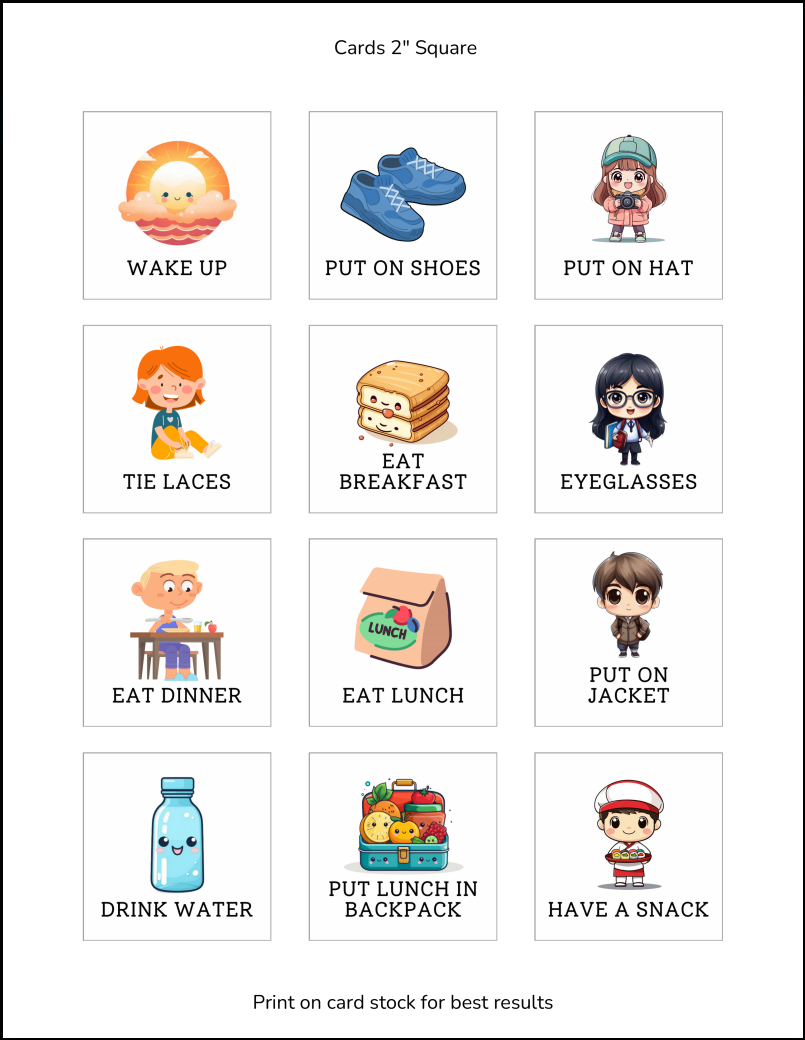
In this article, you’ll find a collection of printable behavior charts for children, along with practical tips for using them successfully at home or in the classroom. Don’t forget to download the free daily activity cards for kids at the end of the article to make everyday life easier and more enjoyable.
How to use behavior diagrams effectively
Here’s a quick process for getting good results using behavioral charts:
- Decide on the specific behaviors you want your child to develop.
- Choose a chart design. To motivate your children, you may want to choose designs that include things they like or are interested in.
- Introduce your children to the key components of diagrams. Explain how the chart tracks their good behavior.
- If using a reward system, discuss the ultimate reward your child can receive for achieving the goal.
- Be patient and gentle, especially when your child doesn’t (yet) reach their goals.
Read on to see our list.
1. Morning Checklist
teach children to have a morning routine Help them develop good habits as they grow up.
This customizable chart is a checklist of activities kids need for their morning routine. Once they complete the listed activities, they can easily tick the boxes.
You may want to print the chart and laminate it with dry erase markers for reuse.
2. Check mark chart
Older children can benefit from visual reminders to teach good behavior. The chart shown above Might be effective for children who are no longer interested in cartoon characters.
Instead of a rich graphical chart, this example provides checkboxes for each day of the week.
Provides a column where users can list the behavioral goals they need to work on. They can then track how well they accomplish their goals by ticking the appropriate boxes.
3. Behavioral reporting
This chart is designed for classroom use, but can be modified for use at home or in a homeschool setting.
The user indicates how often he or she exhibited good behavior throughout the day, and a column displays the specific good behavior targeted.
There is also space at the bottom of the page to take notes. You can use it to summarize or provide anecdotes about the student/child’s behavior throughout the day.
4. Dry Erase Board Chart Template
This very simple behavior chart Use a dry erase board and some colorful sticky notes to record desired behaviors and assign chores to older children.
Parents simply assign each child a specific colored sticky note. Chores and target behaviors can then be written down and placed on the board for the specific child.
Once the child completes the task, he or she hands the sticky note to the adult for proper recording.
In addition to encouraging good behavior, this type of chart helps instill personal responsibility For older children, because they don’t get verbal reminders from adults about what they should do.
5. Summer Rules Checklist Template
For children, summer vacation means a break not only from school but also from most family responsibilities. Unfortunately, this means they often spend all day staring at electronic devices during the school holidays.
This worksheet ensures children stay organized during the holidays. By giving your kids a series of tasks to complete before they can use their gadgets, you not only teach them the value of building a habit, but you also reduce the amount of time they spend on their devices.
6. A suite of behavioral trackers
This set of behavior charts and trackers uses techniques to encourage good behavior, including ABC charts and scatter plots. Both charts promote mindful parenting.
ABC stands for:
one – Antecedents
Second – Behavior
C – result
When using this chart to track your child’s behavior, you are encouraged to reflect on what happened before the incident involving the unacceptable behavior (antecedent), describe what the child did (behavior), and state the consequences or effects of the behavior (consequence).
By doing this, you gain a better understanding of the underlying causes of your child’s behavior, allowing you to better develop interventions to prevent the behavior from happening again.
Scatter plots, meanwhile, are great for finding the exact moments when unacceptable behavior occurs. Using this chart, you can record the number of occurrences of a specific behavior within a half-hour interval. This way, you can get a clearer picture of when a certain behavior occurs and find a way to prevent it from happening or lessen its impact on you and your child.
7. The world’s simplest behavioral diagram
This is a simple system you can adopt for your home. What stands out about this template is its focus on good behavior.
This chart is for one week monitoring. Every time a child exhibits good behavior, they receive a point.
Hopefully by the end of the week, they’ll be at 10. It’s up to you whether you want to build a reward system to go with this good behavior tracker.
8. Behavior punch cards
These good behavior cards can be used to motivate kids to do more than just hang out on their devices.
You and your child can discuss rules using a punch card system to instill good behavior. For example, you can set up rewards that they can receive for checking in.
9. Color-Coded Behavior Charts
This chart is easy to make and very simple to use. This is a great system for tracking children’s behavior throughout the day.
The daily goal is to achieve “red” status, which is equivalent to “outstanding.”
The clothespins move up or down along the edge of the chart, depending on how the child behaves.
Falling in the purple part of the chart means adults decide consequences for undesirable behavior.
Some parents use wooden clothespins with their children’s names on them as indicators. This chart can be used to track multiple children at the same time.
10. Unicorn Behavior Chart
This chart features a unicorn design. You can also find other fun designs that kids will love on the creator’s website.
For this chart, children and adults first need to discuss and agree on a few things:
Free Download: Daily Cards for Kids
Routine activity cards for kids provide colorful visual reminders to help children follow their daily routines more independently and confidently. They’re a great companion to behavioral charts, helping you develop healthy habits more easily and reduce daily distress.
Download your free copy to help your child develop positive habits and stick with them.
(This link will open a Google Drive folder where you can get PDF downloads of the cards in various sizes)
final thoughts
When children are fully engaged and empowered, they are often willing to improve their behavior.
This can be a springboard for them to develop good, healthy habits as they grow older.
Visual reminders, like these example behavior charts for kids, are a great way to grab their attention and encourage them to do better.
We hope you found a favorite among today’s featured charts.
For more resources on helping your kids develop good habits, the following posts are worth checking out:
Finally, if you want to improve your parenting skills, Then check out this resource which will show you how to get your child to listen without yelling, nagging or losing control.